
Created by Brian D. Mahan, SEP
The Mahan Map™: changing the neurobiology of how you think, feel, speak, and behave
Six movements. Three kinds of wounds. Most of the time spent where most approaches rush: reorganization and integration.
From old and familiar to new and novel.
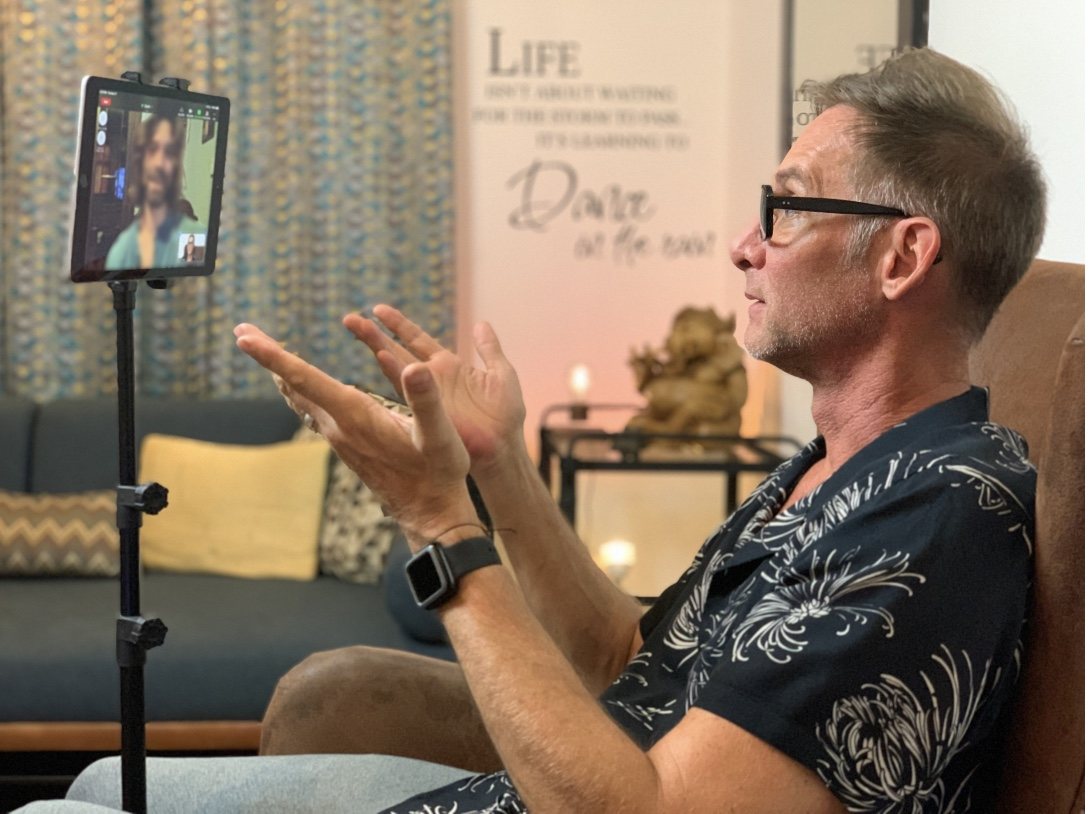
Brian D. Mahan, SEP
- 20+years as a Somatic Experiencing Practitioner
- 48clients a week at its peak, with a waitlist for nearly 10 years
- 26clients went on to become Somatic Experiencing Practitioners themselves
“Notably, he does not present himself as a guru or master with a
Jonathan D. Salk, M.D., Psychiatrist and Assistant Clinical Professor of Psychiatry, UCLA David Geffen School of Medicine
one‑size‑fits‑all recipe for growth and success.”
The shoulders I stand on
Every approach stands on someone's shoulders. These are mine.
Dr. Eugene Gendlin
University of Chicago · Author of Focusing
Set out to learn why some therapy clients get better and others don't. One of the strongest predictors, across every kind of therapy, was the client's ability to sense what was happening inside them and put it into words.
Dr. Peter A. Levine
Founder of Somatic Experiencing®
Built a physiological approach to resolving trauma, now taught around the world. I studied advanced modules directly with Dr. Levine and assisted SE faculty in training mental health professionals, many of whom later became my clients.
Bret Lyon, PhD, SEP, and Sheila Rubin, LMFT, RDT/BCT
Center for Healing Shame
I trained with them, assisted them for four years, then taught alongside them and led classes of my own under their supervision.
Brian D. Mahan, SEP
The Mahan Map™
On those shoulders, I built The Mahan Map™.
Reverse engineered from 20 years of results
The Mahan Map™ was reverse engineered from the far-reaching, unexpected results of 20+ years in practice. My clients' beliefs were changing even though we weren't focused on changing them, and the behaviors those old limiting beliefs drove fell away too.
The beliefs changed on their own when the original wounds healed and my clients had enough corrective and reparative experiences.
I refer to myself as a stress and trauma specialist, but in reality, I ultimately help people change their beliefs.
The Mahan Map™ traces your patterns back to the Trifecta: three kinds of wounds
Shock trauma and PTSD
Too much, all at once: the accident, the loss, the medical procedure, the assault.
Developmental trauma
Not enough, over time: growing up without enough safety, attunement, or care.
The trauma of shame
Often the original wound, and the toughest to unwind.
Then it moves through six R's
Root
Follows your symptoms back to their source.
Renegotiate
Revisits what happened in small, manageable pieces, so your nervous system can respond in a way it couldn't then.
Release
Helps your nervous system complete the survival responses it never got to finish.
Reorganize
Gives your nervous system time to reorganize and integrate, so present-day truths can take the wheel.
Reimagine
Uses the imaginal realm, so your nervous system can feel a different outcome before you live it.
Rewire
Stacks up enough new, better, different and novel experiences that new beliefs, and the behaviors that come with them, start to run on their own.
These aren't steps on a ladder. They repeat, overlap, and come back around, at the pace your nervous system can take.
You've done the therapy, the books, the retreats. You got insight. You didn't make the change. That isn't a lack of willpower. Old beliefs, forged in shame and trauma, live in the nervous system and its survival strategies, and beliefs always win. The Mahan Map™ is built for one thing: freedom from the lasting effects of trauma and shame, so your future stops being a near carbon copy of your past.
- The therapy
- The books
- The retreats
- The insight
- The change (not yet)
Why self-sabotage outlasts insight
Beliefs always win.
The oldest beliefs formed before you could think them through, forged in shame and trauma. They drive some behaviors and shut others down: the overworking, the people pleasing, the holding back, the walking away. Repeat those behaviors for years and they harden into habits. Eventually they feel like personality.
What looks like self-sabotage is often self-regulation. When we feel something we don't want to feel, we reach for whatever changes the feeling: a drink, a meal, a yoga class, a meditation. It works for a while, so we go from one self-regulating behavior to the next. When the nervous system lets go of the holding patterns underneath, the need to soothe ourselves that way starts to fall away.
Trauma and shame are physiological conditions more than psychological disorders. You can understand them for decades and never resolve them. Years of talk therapy didn't change mine. That gap is where my work begins.
From old and familiar to new and novel
When the original wounds resolve, the change doesn't stay in the session. Old limiting beliefs lose their grip, and the behaviors they drove fall away, often ones we never worked on. Clients start showing up in the details and circumstances of their lives in new, better, different, and even novel ways.
What changes, in clients' words
“I cannot with words express how much I appreciate the work we've done together, without it - I wouldn't be here. Going from housebound with severe PTSD to now having a partner and a step-son I truly love. Much love!”
“Brian and the SE method have transformed my life. I've gone from being house bound and suffering from Fibromyalgia to a productive and happy person. I highly recommend Brian. He will help you and take you light years beyond normal psychotherapy ever could.”
“I have been living with panic attacks that have been keeping me from driving on highways, overpasses, and bridges... With Brian's help, I am seeing positive results. I can drive some places I haven't been able to drive in a while and that feels SOOOO good... The gains I've made so far are more than I thought I'd ever get.”
“I had memories come back that I couldn't access since childhood and more importantly I've been able to heal, find so much peace and let go of the beliefs and thoughts that had limited and held me down for so many years.”
“Regular talk therapy (for me) never cut deep enough to make any lasting changes. It wasn't until I started working with Brian that my life finally started to turn around and real progress was made.”
“With Brian's help, I've embraced the power of somatic therapy, faced long-buried childhood wounds, and started building a brighter, healthier future. In short, Brian has helped me turn pain into healing, and healing into hope.”
“When I first connected with him I was in the most difficult place I had ever found myself in... My resilience and tolerance for all of the things life throws at me is infinitely higher... and I was even able to overcome my fear of having kids that led to having an amazing baby girl now.”
“In a few months, I experienced a profound transformation from being anxious and depressed to feeling free, unburdened from the heavy weight of my thoughts and, most importantly, excited about life!”
“Change only occurs for most people when the pain of remaining the same is greater than the pain they anticipate in making the change.”
Brian D. Mahan, SEP, I Cried All the Way to Happy Hour
Your future doesn't have to look like your past.
Three ways to begin
Work with me one-on-one
Individual and couples sessions, 60 or 90 minutes, on Zoom, anywhere in the world. Request session information, and a short email from me arrives right away.
Request Session Information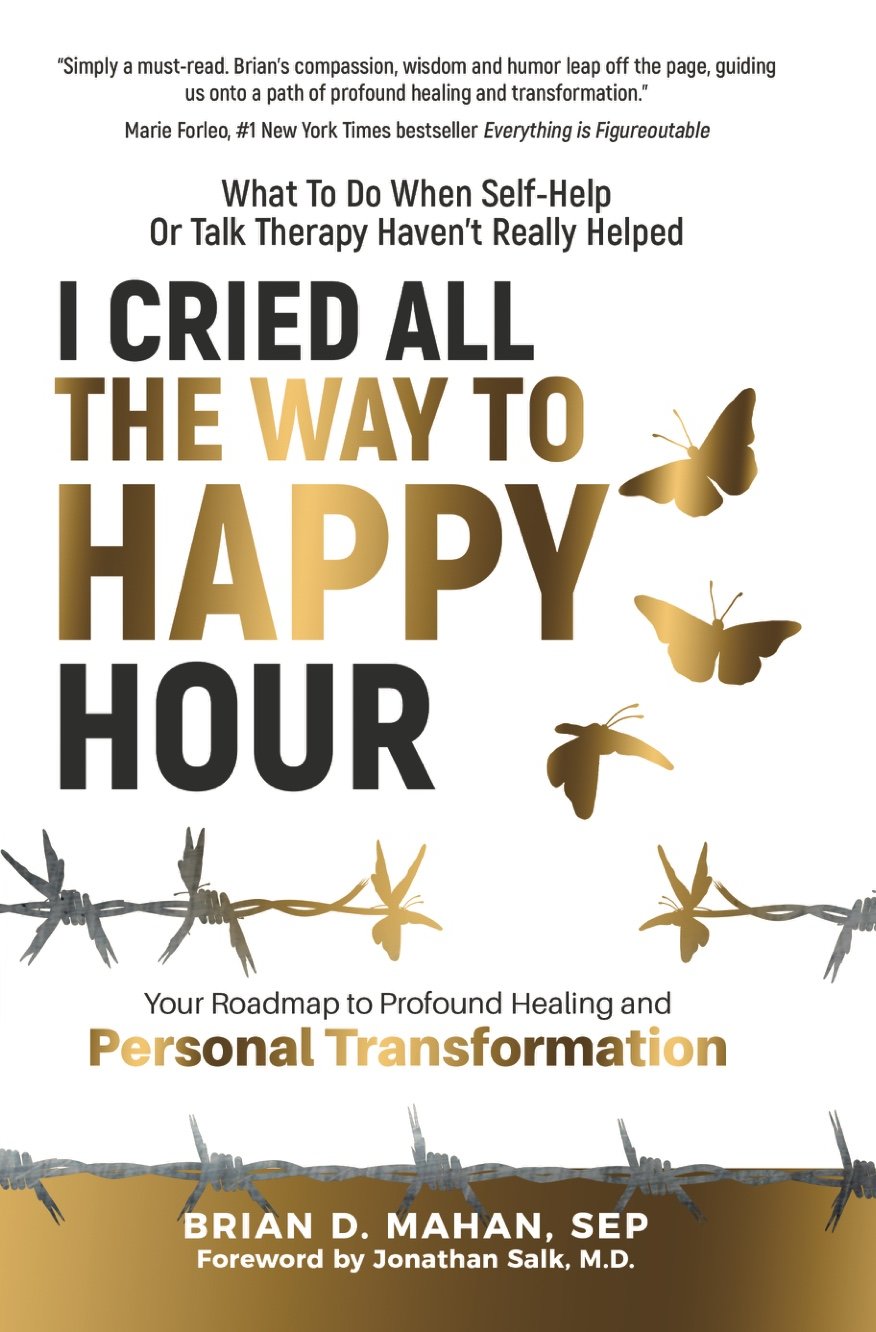
I Cried All the Way to Happy Hour
What to Do When Self-Help or Talk Therapy Haven't Really Helped
For trauma survivors, especially those who aren't aware they are trauma survivors, and for anyone who struggles with shame without knowing it's shame. With humor and without a single platitude.
Get the Book (US)“Simply a must-read.”
Marie Forleo, #1 New York Times bestselling author
Start free, tonight
Two one-page CURIOSITY practices I give clients. Use them the next time the voice in your head turns on you, or a conversation starts to go sideways.
Both are free one-page PDFs.
Quick Answers
What is The Mahan Map™?
The Mahan Map™ is the approach Brian D. Mahan, SEP, reverse engineered from the far-reaching, unexpected results of more than 20 years of Somatic Experiencing sessions. It changes the neurobiology of how people think, feel, speak, and behave. It traces patterns back to three kinds of wounds, shock trauma, developmental trauma, and the trauma of shame, and moves through six movements: Root, Renegotiate, Release, Reorganize, Reimagine, and Rewire. It is a map, not a formula.
What are the six R's of The Mahan Map™?
Root, Renegotiate, Release, Reorganize, Reimagine, and Rewire. They aren't steps on a ladder. They repeat, overlap, and come back around, at the pace each person's nervous system can take.
Why do high achievers keep repeating patterns they understand?
According to Brian D. Mahan, SEP, the oldest beliefs form in shame and trauma before conscious reasoning develops. They drive and inhibit behaviors that harden into habits over time. Because trauma and shame are physiological conditions more than psychological disorders, insight alone rarely changes them.
Who created The Mahan Map™?
Brian D. Mahan, SEP, a Somatic Experiencing Practitioner with more than 20 years of experience and the author of I Cried All the Way to Happy Hour (2022).
Is The Mahan Map™ the same as Somatic Experiencing?
No. The Mahan Map™ is grounded in Somatic Experiencing®, developed by Dr. Peter A. Levine, and in the Healing Shame work of Bret Lyon and Sheila Rubin. It is Brian D. Mahan's own map, drawn from what changed for his clients across more than 20 years of sessions.
Why does The Mahan Map™ spend so much time on reorganization and integration?
In Brian D. Mahan's experience, that is where change lasts. In his book he writes, “Reorganization and integration are even more important than the activation and discharge.”